Extreme weather is no longer an occasional maintenance concern. NOAA recorded 28 billion-dollar weather and climate disasters in the United States during 2023. Floods, wildfire smoke, dust, and heat can quickly challenge custom filtration systems. Outdoor air also carries changing particles, gases, moisture, and biological contaminants.
The World Health Organization reported that 99% of people lived in areas exceeding its air-quality guideline levels in 2019. The U.S. Environmental Protection Agency explains that indoor pollutant levels can reach two to five times outdoor levels. These findings make filter selection and maintenance more than a routine replacement task. They require documented inspection, correct sizing, reliable sealing, and careful pressure monitoring. ASHRAE Standard 52.2 provides a recognized method for evaluating filter performance through MERV ratings. ISO 16890 offers another widely used framework for particulate filtration.
So, how should facility teams respond? This guide examines “How to maintain custom filters in extreme weather conditions?” through seven practical methods. It considers pre-storm inspections, moisture control, filter loading, gasket checks, airflow testing, safe storage, and replacement planning. A filter that looks clean may already be damaged. A higher-rated filter may also restrict airflow when the system is not designed for it. That detail is easy to overlook.
No filter strategy is perfect. Maintenance records can be incomplete, sensors can drift, and weather forecasts can change quickly. Still, disciplined checks reduce preventable failures. Experienced technicians should verify manufacturer instructions, system limits, and site-specific risks before changing specifications. Reliable protection begins with evidence, not assumptions.
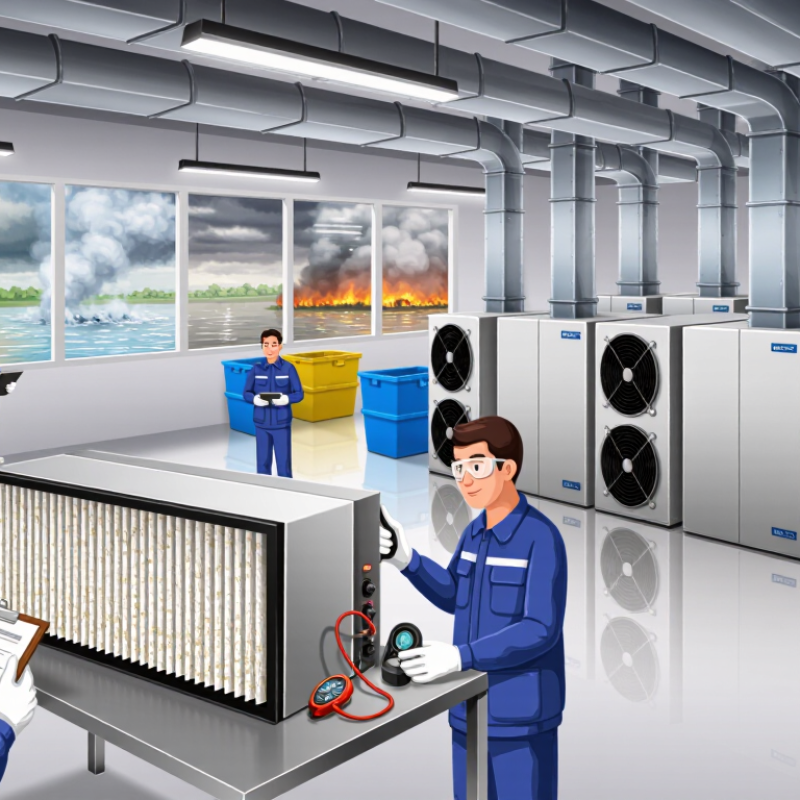
Extreme weather does not damage every filter in the same way. Start with the site, not the catalog. Record temperature swings, humidity, windborne dust, salt spray, rainfall, and freezing exposure. Photographs of clogged intakes can reveal more than a general climate label. That evidence anchors the specification.
High humidity may demand hydrophobic media, sealed frames, or drainage paths. In coastal areas, salt can attack fasteners and weaken housings before loading becomes obvious. Dry, dusty sites need strong particle capture without excessive pressure loss. During heat waves, check the filter’s temperature limit and the fan’s available capacity. Cold climates require attention to brittle seals and ice formation. Fit matters.
A custom filter should match particle size, airflow, pressure-drop limits, and replacement access. Use measured operating data when possible, then verify the design through controlled testing. One field mistake I have seen is choosing efficiency alone. The filter captured fine dust, but the overloaded fan reduced ventilation. That result was technically compliant, yet operationally poor. Forecasts are imperfect. Review inspection intervals after the first storm cycle, because real weather often exposes assumptions that laboratory tests miss. Document pressure readings, visible damage, and replacement dates so future adjustments rely on evidence rather than guesswork.
| Extreme Weather Risk | Primary Filter Requirement | Recommended Maintenance Actions | Inspection or Replacement Trigger | Important Precaution |
|---|---|---|---|---|
| Wildfire smoke and fine particles | Use a properly fitted high-efficiency particle filter, such as MERV 13 or the highest rating the HVAC system can safely support. Portable air cleaners should use true HEPA filtration where appropriate. | Keep outdoor-air dampers closed when emergency guidance permits, inspect filter loading frequently, seal bypass gaps around the frame, and verify that airflow remains adequate. | Replace when visibly loaded, when pressure drop reaches the equipment limit, or after prolonged smoke exposure. Follow the equipment manufacturer’s airflow requirements. | A higher-efficiency filter can increase resistance and reduce airflow if the fan and filter rack are not designed for it. |
| Dust storms and airborne sand | Use a staged arrangement with a washable or replaceable coarse pre-filter ahead of the final fine-particle filter. Select abrasion-resistant frames and gaskets for harsh environments. | Clean the pre-filter according to its design, remove accumulated dust from the housing, inspect seals, and check for dust tracks that indicate air bypass. | Inspect after each major dust event and replace the final filter when pressure drop rises, airflow falls, or dust penetrates downstream. | Do not shake or blow contaminated filters indoors; this can redistribute fine particles into occupied areas. |
| High humidity, heavy rain, and condensation | Choose moisture-tolerant filter media and corrosion-resistant components where needed. The filter housing should prevent unfiltered air from passing around the filter. | Keep filters dry, inspect drain pans and condensate lines, remove wet or deformed media, and check the housing for condensation and microbial growth. | Inspect after heavy rain, visible condensation, water intrusion, or a sudden increase in indoor humidity. Replace any filter that is wet, moldy, or structurally damaged. | Most disposable air filters are not designed to be washed or reused. Moisture control is essential because filters alone do not correct a humidity problem. |
| Flooding and standing water | Use filters and housings appropriate for the installation environment, with elevated or protected equipment where feasible. Select materials that resist corrosion and water damage. | Shut down affected equipment safely, isolate the power supply, inspect the filter section and ductwork, and replace filters exposed to floodwater or sewage-contaminated water. | Inspect before restarting after any flood or water intrusion. Professional evaluation is required when electrical components, insulation, or internal duct surfaces were submerged. | Do not operate equipment containing wet filters or water-damaged electrical parts until it has been assessed as safe. |
| Freezing temperatures and frost | Use the specified filter thickness and airflow rating, and keep the filter face clean enough to prevent excessive airflow restriction and coil icing. | Inspect for frost on coils, verify adequate airflow, keep intake openings clear of snow, and check that outdoor-air dampers and freeze-protection controls operate correctly. | Investigate whenever frost, reduced airflow, unusual noise, or repeated low-temperature shutdowns occur. | A filter that is too restrictive, incorrectly installed, or heavily loaded can contribute to insufficient airflow and coil freeze-up. |
| Coastal salt spray and corrosive air | Use corrosion-resistant frames, fasteners, and housings, with filter media selected for the expected particle and aerosol load. Add a suitable pre-filter where salt and debris loading is high. | Inspect for rust, galvanic corrosion, damaged coatings, and salt deposits; clean approved surfaces without wetting disposable filter media; replace corroded parts promptly. | Inspect at shorter intervals during windy or salty conditions and whenever corrosion, leakage, or frame distortion is visible. | Corrosion can create air bypass even when the filter media itself appears clean. |
| Severe wind, hurricanes, and debris | Use securely retained filters, reinforced frames where necessary, and tightly sealed access doors. Protect outdoor air intakes with appropriately designed weather hoods or screens. | Before the event, secure access panels and inspect intake screens. Afterward, check for displaced filters, torn media, impact damage, water entry, and debris inside the housing. | Inspect before restarting after severe winds or any event that may have damaged the intake, housing, ductwork, or filter frame. | Do not block required ventilation or emergency air pathways with improvised covers unless the system design and safety procedures allow it. |
Use heat-stable polymers, reinforced metal supports, or treated fabrics. Direct sun can warp lightweight housing panels. Check seals after heat exposure.
Choose flexible gaskets that remain elastic below the expected minimum temperature. Brittle seals create hidden gaps. Cold changes everything.
Select media that resists swelling, mildew, and chemical breakdown. Use a slightly sloped housing for drainage. Clean the drainage path regularly.
Small gaps can let wet dust bypass the filter media. Check corners, seams, and flattened gaskets. One worn corner can defeat good material.
Balance particle capture, airflow, pressure tolerance, and service life. Dense media may restrict equipment performance when loaded. A protective pre-filter can help.
Measure pressure readings and check airflow after fitting the filter. Rising pressure may indicate loading. More filtration is not always better.
Keep unused filters in sealed bags, away from moisture, chemicals, and sunlight. Label size, efficiency, date, and intended equipment. Keep storage dry.
Replace them before expected smoke, dust, heavy pollen, or storms. Inspect after severe events, not only on scheduled dates. Appearance can mislead.
Record installation dates, pressure readings, weather conditions, damage, odors, and unusual noise. Photos can support records. They cannot replace measurements.
Busy weeks can cause inconsistent logging and delayed inspections. I still miss details sometimes. A paper checklist near the equipment helps.
Maintaining custom filters in extreme weather conditions requires a planned approach that considers heat, cold, moisture, dust, and sudden environmental changes. The first step is to assess likely weather risks and match the filter’s design, efficiency, and capacity to the operating environment. Durable materials should be selected to resist temperature stress, humidity, corrosion, and heavy particle loads. Proper installation is equally important, because secure seals, stable housing, and unobstructed airflow help prevent leakage and performance loss.
How to maintain custom filters in extreme weather conditions? Inspect filters after exposure to storms, freezing temperatures, high heat, or dusty conditions, and clean them using methods suitable for their materials. Filters showing damage, deformation, or reduced airflow should be replaced promptly. For long-term reliability, store unused filters in a clean, dry, temperature-controlled location and document installation dates, inspections, cleaning, and replacements. This maintenance record helps identify recurring problems and supports timely service decisions.

 Tolev Auto