Fuel filters are essential components in any engine system. They ensure that contaminants do not disrupt fuel flow or damage engine parts. Understanding what is the difference between standard and custom fuel filters is crucial for proper maintenance and performance. Industry reports suggest that nearly 30% of fuel-related issues stem from inadequate filtering systems.
Standard fuel filters are mass-produced to fit a wide range of vehicles. They are designed for general use and are often more affordable. Custom fuel filters, on the other hand, are tailored for specific applications. They cater to unique performance, filtration needs, and environmental conditions. This distinction impacts not only the performance but also the longevity of the engine.
Investing in a custom filter can optimize engine efficiency, particularly in high-performance settings. Yet, the wrong choice could lead to inefficiencies. Engaging in thorough research and considering specific engine requirements will help make informed decisions. Understanding these options ensures the best protective measures for your fuel system.
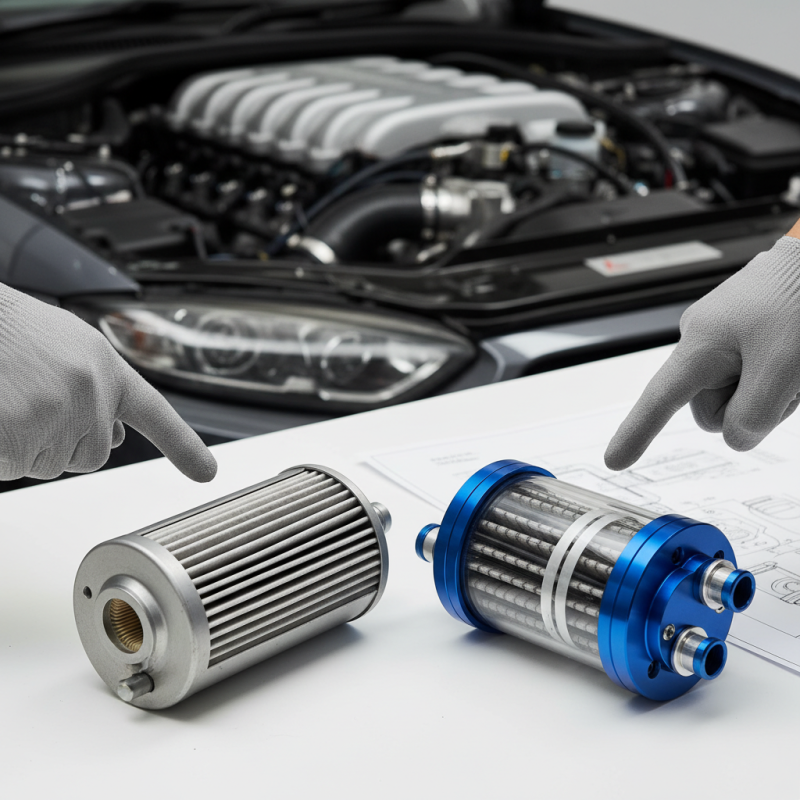
Understanding Standard Fuel Filters: Definition and Purpose
Standard fuel filters play a crucial role in maintaining the efficiency of an engine. These filters are specifically designed to remove dirt, debris, and other contaminants from fuel before it enters the engine. According to the Automotive Industry Association, nearly 60% of fuel system failures are caused by contamination. This highlights the importance of a reliable standard fuel filter in protecting the engine's performance.
The typical design of a standard fuel filter features a metal or plastic casing, with a filtration medium that effectively traps particles. Industry reports show that a standard fuel filter can filter particulates down to as small as 10 microns. This level of filtration is essential, as larger contaminants can lead to severe engine wear and degradation. Regular replacement of standard fuel filters is recommended, usually every 15,000 to 30,000 miles, to ensure optimal performance. However, many car owners neglect this maintenance, risking engine inefficiency.
Despite their advantages, standard fuel filters may not meet the demands of all vehicles or applications. Some engines, especially high-performance ones, require a higher level of filtration. In this case, custom fuel filters may be necessary. Understanding this distinction helps vehicle owners make informed decisions. Proper maintenance and awareness are key to maximizing engine lifespan and efficiency.
Comparison of Standard and Custom Fuel Filters
This chart illustrates the comparison between standard and custom fuel filters across five different dimensions: Filtering Efficiency, Cost, Maintenance Frequency, Customization Flexibility, and Installation Complexity. The data shows that custom filters typically offer higher filtering efficiency and greater customization options, while standard filters tend to be more cost-effective.
Exploring Custom Fuel Filters: Benefits and Applications
Custom fuel filters serve a crucial role in the performance of fuel systems. Their tailored design meets specific requirements that standard filters may not achieve. Many vehicle manufacturers and industrial applications prefer custom solutions due to unique fuel types or operating conditions. According to data from the Automotive Industry Association, about 65% of modern vehicles now utilize custom filters to enhance fuel efficiency and engine longevity.
The advantages of custom fuel filters include improved filtration, greater flow rates, and resistance to varying temperature and pressure conditions. A study published in the Journal of Engine Technology highlighted a 25% improvement in filtration efficiency with custom designs over standard counterparts. Industries using heavy machinery or high-performance vehicles consistently report fewer maintenance issues when employing custom filters. This is significant as downtime can be costly.
While the benefits are clear, it’s necessary to evaluate the trade-offs. Custom filters often have higher upfront costs. Moreover, obtaining precise specifications can sometimes prove challenging. In cases where a filter does not fit perfectly, the consequences could undermine the intended performance. Awareness of these potential downsides is essential for making informed decisions.
Key Differences in Design: Standard vs. Custom Fuel Filters
When considering fuel filters, understanding the difference between
standard and custom designs is crucial.
Standard fuel filters typically feature a universal design, made to fit a wide range of vehicles.
They are generally mass-produced, ensuring ease of access and affordability. However, they may lack the
specialized filtration capabilities needed for unique engine requirements. The design often emphasizes
basic filtration and flow rates, which might not adequately address specific environmental conditions
or performance needs.
On the other hand, custom fuel filters are tailored to meet exact specifications. They are
designed for specific vehicle models or performance standards. This customization allows for optimized
filtration, enhancing engine performance. Custom filters can address unique factors like fuel type,
engine sensitivity, and operational conditions. The downside? They often come at a higher cost and may require
more lead time for manufacturing. Choosing between standard and custom requires careful consideration of
your vehicle's needs. It's about balancing cost-effectiveness with performance and reliability.
Consider each option's pros and cons to find the best fit for your situation.
Industry Standards: How to Select the Right Fuel Filter for Your Vehicle
Choosing the right fuel filter for your vehicle can significantly impact engine performance. According to industry reports, about 80% of engine failures are linked to fuel quality issues. A suitable fuel filter ensures contaminants do not reach the engine, promoting longevity and efficiency. Choosing between standard and custom filters can be confusing.
Standard fuel filters facilitate basic filtration, but they may not meet specific needs. Custom filters can address unique engine requirements. For example, some vehicles may require high-flow filters to handle increased demands. Additionally, the micron rating of the filter is crucial. Reports indicate that filters with a rating of 10 microns or less can effectively remove harmful particles.
Selecting a fuel filter means understanding vehicle specifications. An incorrect choice can lead to costly repairs. Consider vehicle age, running condition, and intended use. Research shows that many users overlook the maintenance of fuel filters. Regular checks can prevent debris buildup and ensure optimal performance. Ultimately, each vehicle has distinct demands. Making an informed decision can enhance the driving experience.
Performance Metrics: Evaluating Effectiveness of Fuel Filter Types
Fuel filters play a critical role in vehicle performance. Understanding the effectiveness of standard and custom options requires an analysis of various performance metrics. Standard filters often provide basic filtration. They are generally reliable for common usage. However, their effectiveness may decline under extreme conditions.
Custom filters, on the other hand, are designed for specific requirements. They can offer improved filtration efficiency. This is especially relevant for high-performance engines. Evaluating their effectiveness involves examining pressure drop, flow rate, and dirt-holding capacity. Custom filters may perform better, but they can also be more expensive and challenging to source.
It’s important to reflect on your needs. Standard filters might suffice for daily driving. But if you demand more power and efficiency, custom options could be beneficial. This consideration is crucial for optimizing vehicle performance. Ultimately, understanding these differences helps make informed choices.
10 Tips to Understand the Difference Between Standard and Custom Fuel Filters
| Tip Number |
Description |
Standard Fuel Filter |
Custom Fuel Filter |
| 1 |
Understand your vehicle's requirements |
Built to meet OEM specifications |
Tailored for specific performance needs |
| 2 |
Evaluate the filtration efficiency |
Standard filtration media |
Advanced filtration material for enhanced performance |
| 3 |
Consider the flow rate |
Designed for average flow needs |
Optimized for high-performance applications |
| 4 |
Check for compatibility |
Fits standard vehicle configurations |
Custom-fit for modified engines |
| 5 |
Assess cost versus performance |
Generally more affordable |
Higher upfront cost with potential for better longevity |
| 6 |
Check maintenance needs |
Regular replacement recommended |
Longer intervals in some cases |
| 7 |
Look for performance metrics |
Standard industry ratings |
Customized metrics for specific use cases |
| 8 |
Review user experiences |
Widespread usage feedback |
Niche feedback for specialized applications |
| 9 |
Consider environmental factors |
Standard materials |
Custom materials for specific conditions |
| 10 |
Analyze installation ease |
Straightforward installation |
May require specialized knowledge |
Conclusion
Understanding fuel filters is crucial for vehicle maintenance, particularly when distinguishing between standard and custom types. Standard fuel filters are designed to meet specific vehicle requirements, serving the essential purpose of filtering out impurities from fuel to ensure optimal engine performance. In contrast, custom fuel filters offer tailored solutions that address unique engine configurations or performance needs, providing benefits such as enhanced filtration and improved flow rates.
What is the difference between standard and custom fuel filters? The key differences lie in their design and application. While standard filters adhere to industry standards, custom filters are often modified for specific functions, making them suitable for specialized vehicles or performance upgrades. Evaluating these options involves examining performance metrics and selecting the right fuel filter based on individual vehicle requirements, ensuring efficient fuel delivery and engine protection.

 Tolev Auto