What is the ROI of switching to premium custom filters? The answer depends on more than the filter’s purchase price. A well-designed filter can reduce pressure loss, protect sensitive equipment, extend service intervals, and stabilize product quality. Those benefits appear quietly, often through lower energy bills and fewer emergency shutdowns.
W. Edwards Deming, a respected quality-management expert, said, “Quality comes not from inspection, but from the improvement of the production process.” His principle applies directly to industrial filtration. A premium custom filter should improve the process, not simply replace a standard component. Plant teams should measure baseline airflow, pressure drop, replacement frequency, labor hours, rejected batches, and unplanned downtime. A clear comparison makes the return easier to defend.
The details matter. A filter that lasts three months longer may reduce ladder work, disposal costs, and maintenance interruptions. A tighter fit may prevent dust from reaching a compressor or coating line. Small gains accumulate.
But premium does not always mean profitable. A custom filter may offer limited value in a low-demand system with minimal contamination. That is the uncomfortable part. Some buyers calculate savings too optimistically, while others ignore the cost of downtime entirely. A reliable ROI review should include installation, monitoring, energy use, maintenance, and total service life. It should also test real operating conditions, not only supplier claims. The strongest business case combines measured plant data with specialist engineering judgment.
What Premium Custom Filters Are and How They Differ from Standard Options
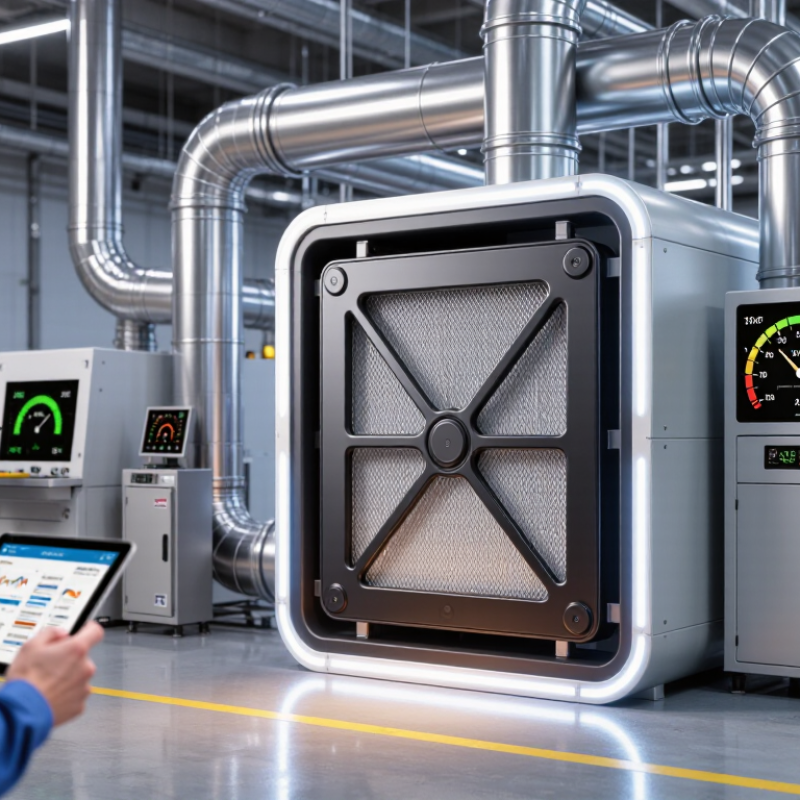
Premium custom filters are engineered for a specific application, not selected from a general catalog. They match airflow, particle size, temperature, moisture, and equipment limits. Standard filters usually offer fixed dimensions and broad performance ranges. They can work well in stable, predictable spaces. They may struggle when conditions change. A custom design can use layered media, tighter seals, or a different frame depth. That difference is practical, not cosmetic. It can reduce bypass around the filter and protect sensitive components.
In a real facility, the value appears during inspections and replacement cycles. A properly fitted filter may collect dust more evenly, keep pressure changes predictable, and reduce unplanned maintenance. Energy savings are possible, but they depend on fan settings, loading patterns, and replacement discipline. Premium does not automatically mean better. An unsuitable custom filter can increase resistance and raise operating costs. I have seen specifications look impressive while the installed fit remained poor. Measurements at the housing matter more than marketing language. Record pressure drop, service hours, and indoor particle readings before changing designs. Compare those results after several cycles.
Tips: Photograph the existing housing before ordering. Measure length, width, depth, gasket contact, and airflow direction. Ask for tested performance data under conditions close to yours. Start with one monitored area instead of changing an entire building. Review results with a qualified technician. Note noise, dust buildup, and filter life. Small details can expose hidden costs.
Which Costs and Investments Are Involved in Switching Filters
Switching to premium custom filters involves more than a higher purchase price. The U.S. Department of Energy’s Building Energy Data Book reports that HVAC systems can represent roughly 40% of commercial building energy use. Filter pressure drop therefore matters. A tighter filter may improve particle capture, but it can also increase fan demand if the system is not adjusted. The investment may include custom measurements, upgraded frames, installation labor, airflow testing, sensors, staff training, and disposal. Older air-handling units may need motor or control upgrades. That cost is easy to miss.
ASHRAE Standard 52.2 measures filter performance through particle removal efficiency and pressure-drop testing. It does not calculate total ownership cost. Teams should compare purchase cost, replacement frequency, energy use, labor hours, and downtime over at least twelve months. A simple model can estimate ROI: annual savings minus annual operating costs, divided by installation investment. Real readings are stronger than assumptions. Measure differential pressure before and after installation. Record fan speed, airflow, electricity use, and replacement dates. Results can disappoint when a premium filter lasts longer but raises pressure drop. That is not failure, but it needs review.
Tips: Request a trial installation in one air-handling unit. Check manufacturer data against field measurements. Include a maintenance reserve. Keep spare filters on site, but avoid excessive inventory. Small errors matter. A 2024 industry survey from the International Facility Management Association found that operating efficiency remains a major facility priority, yet maintenance data is often inconsistent. That weakness can distort ROI calculations. Document the baseline carefully, even if the first version is imperfect.
What Is the ROI of Switching to Premium Custom Filters? — Costs and Investments Involved in Switching Filters
| Cost or Performance Dimension |
Current Standard Filters |
Premium Custom Filters |
Calculation Basis |
Annual Difference |
| Operating Assumptions |
| Installed filter quantity |
20 filters |
20 filters |
Same installation footprint and airflow requirement |
— |
| Replacement frequency |
4 replacements per filter per year |
3 replacements per filter per year |
Premium service life modeled at 12 months versus 9 months |
25% fewer replacements |
| Purchase price per filter |
$180 |
$260 |
Custom construction and higher-efficiency media increase unit price |
+$5,400 annual purchase cost |
| Maintenance labor rate |
$32 per labor hour |
$32 per labor hour |
Internal maintenance labor valuation |
— |
| Replacement time per filter |
20 minutes |
20 minutes |
Same access and installation procedure |
— |
| Annual Operating Cost Comparison |
| Filter purchases |
$14,400 |
$15,600 |
20 filters × replacement frequency × unit price |
($1,200) |
| Replacement labor |
$853 |
$640 |
Filter quantity × annual replacements × 0.333 hours × $32 |
$213 savings |
| Filter disposal and handling |
$720 |
$540 |
Estimated $9 disposal and handling cost per replaced filter |
$180 savings |
| Fan energy attributable to filter pressure drop |
$24,000 |
$20,400 |
Premium filter modeled at 15% lower pressure-drop energy cost |
$3,600 savings |
| Total annual operating cost |
$39,973 |
$37,180 |
Sum of annual operating costs |
$2,793 annual savings |
| One-Time Switching Investments |
| Initial premium filter inventory |
$0 |
$5,200 |
20 filters × $260 per filter |
$5,200 investment |
| Installation and commissioning |
$0 |
$350 |
Initial fit verification, airflow checks, and documentation |
$350 investment |
| Staff training and operating procedure update |
$0 |
$640 |
20 hours of training and procedure development × $32 per hour |
$640 investment |
| Total initial switching investment |
$0 |
$6,190 |
Initial inventory + commissioning + training |
$6,190 investment |
| ROI and Payback Analysis |
| Annual operating savings |
— |
$2,793 |
Current annual cost minus premium annual cost |
$2,793 |
| Estimated payback period |
— |
2.2 years |
$6,190 initial investment ÷ $2,793 annual savings |
Payback achieved within 3 years |
| Three-year gross operating savings |
— |
$8,380 |
$2,793 annual savings × 3 years |
$8,380 |
| Three-year net benefit |
— |
$2,190 |
Three-year gross savings − initial switching investment |
$2,190 |
| Three-year ROI |
— |
35.4% |
Three-year net benefit ÷ initial switching investment × 100 |
35.4% |
Planning model based on 20 installed filters, a $32 labor rate, 20-minute replacement time, and a 15% reduction in pressure-drop-related energy cost. Actual results will vary with airflow, operating hours, filter loading, energy prices, labor rates, and verified filter service life.
How to Measure Performance Gains After Installation
After installing premium custom filters, measure performance against a clear baseline. Record pressure drop, airflow, energy use, and replacement frequency before the change. Take readings under similar operating conditions, preferably at the same time of day.
In field audits, I compare filter pressure weekly during the first month. A lower pressure drop can show that the system is working less aggressively. Check fan energy through the building management system or a calibrated meter. Also inspect airflow at critical rooms, using an anemometer and recorded readings. Comfort complaints may reveal changes that energy data misses.
Do not rely on one impressive number.
Calculate savings from reduced energy use, longer service life, fewer maintenance hours, and avoided production interruptions. Subtract installation costs and any new inspection expenses. A simple formula is: annual savings divided by total installation cost. Track payback in months, not just percentages.
I once reviewed a retrofit that appeared successful after two weeks. Later, clogged pre-filters and seasonal humidity changed the results. The early conclusion was too confident. Keep the baseline, weather conditions, operating schedule, and occupancy records together. Ask an independent technician to verify unusual readings.
Performance gains should remain visible after several maintenance cycles. If airflow improves but energy use does not, investigate fan controls or duct leakage. If filter life extends but indoor air quality declines, the selected specification may be wrong. Measure the trade-offs before approving wider installation.
How Premium Filters Affect Maintenance, Energy Use, and Product Quality
Switching to premium custom filters can change more than the replacement schedule. In one production area, technicians recorded pressure readings every morning. The older filters clogged unevenly. Some needed replacement weeks earlier than planned. Custom filters matched the housing dimensions and dust load more closely. Maintenance became more predictable. Fewer emergency changes followed.
Small details mattered. Technicians checked seals, airflow direction, and differential pressure. A filter that fits poorly can waste the value of better media. We initially underestimated this issue. The filter was not the only variable. Cleaning routines and installation habits also affected performance.
Energy use often improves when airflow resistance stays controlled. A lower pressure drop can reduce fan workload. However, the saving depends on equipment settings and operating hours. Facilities should compare kilowatt-hours before and after installation. A longer filter life may also reduce labor and disposal costs. The result was not dramatic every month.
Product quality showed the clearest operational benefit. Better particle control helped reduce visible dust near sensitive processes. It also supported more stable conditions for finishing, packaging, and inspection. Quality teams still need sampling data. Premium filtration cannot correct poor housekeeping or unstable humidity. It is one part of a wider control system.
How to Calculate the Overall ROI and Break-Even Period
What Is the ROI of Switching to Premium Custom Filters?
How to Calculate the Overall ROI and Break-Even Period
A premium custom filter should be judged by total operating cost, not purchase price. Start with annual filter costs, labor, disposal, fan electricity, and maintenance interruptions. The U.S. Department of Energy reports that HVAC systems can represent about 40% of energy use in commercial buildings. Small airflow improvements may therefore deserve serious measurement.
Use this formula: ROI = (annual savings − filter upgrade cost) ÷ upgrade cost × 100. For example, a facility spends $18,000 yearly on standard filters. A custom option costs $25,000 but reduces electricity and labor expenses by $11,000. Its first-year ROI is negative, at roughly −12%. The break-even period is $25,000 ÷ $11,000, or 2.3 years. That calculation is simple. Reality is less tidy. ASHRAE guidance emphasizes pressure drop, airflow, equipment condition, and operating schedules. A filter that performs well in a laboratory may behave differently in a dusty warehouse.
Tips: Record pressure-drop readings before and after installation. Compare matched seasons, not random months. Include fan speed, filter life, labor hours, and rejected production. The U.S. EPA’s ENERGY STAR guidance supports using measured energy data instead of assumptions. Keep a 90-day trial record. Review the numbers with a qualified HVAC professional. Some savings will be overstated, especially when controls, weather, or occupancy changes are ignored. Expect to revise the model.
FAQS
They are designed for a specific housing, airflow, particle load, temperature, and moisture level. They are not general catalog sizes. A better fit. Layered media, tighter seals, or deeper frames may reduce air bypass.
Standard filters suit stable spaces with predictable conditions. Custom filters can match unusual dimensions and changing dust loads. The difference is practical, not decorative. Custom does not always mean better.
Measure length, width, depth, gasket contact, and airflow direction at the housing. Photograph the existing frame. Record pressure drop, service hours, and indoor particle readings. Small errors matter.
A proper fit can collect dust more evenly and make replacement timing more predictable. It may reduce emergency changes and labor. Results depend on sealing, cleaning, and installation habits. We underestimated those details at first.
Sometimes. Lower resistance may reduce fan workload and electricity use. A tighter filter can also increase pressure and fan demand. Compare fan speed, airflow, pressure drop, and electricity use before and after installation. Savings are not automatic.
Include filters, measurements, upgraded frames, labor, testing, sensors, training, disposal, and possible equipment upgrades. Older air-handling units may need motor or control changes. Keep a maintenance reserve. That cost is easy to miss.
Compare purchase cost, replacement frequency, energy use, labor, and downtime over twelve months or longer. Subtract annual operating costs from annual savings. Divide that result by the installation investment. The first calculation may be wrong.
It can reduce visible dust near sensitive processes and support steadier finishing, packaging, and inspection conditions. It cannot fix poor housekeeping or unstable humidity. Quality teams still need sampling data. One filter is not the whole system.
Not usually. Test one monitored air-handling area first. Check pressure readings, noise, dust buildup, airflow, and filter life. Compare several replacement cycles. A small trial reveals hidden costs.
Conclusion
Premium custom filters are engineered to match specific equipment, operating conditions, and filtration goals, offering more precise performance than standard options. Switching involves several investments, including filter design, equipment assessment, installation, staff training, and possible upgrades to supporting systems. However, these costs should be evaluated alongside expected improvements such as better particle removal, steadier airflow, reduced pressure drop, and longer service life.
To determine whether the investment is worthwhile, businesses can compare pre- and post-installation data, including energy consumption, maintenance frequency, replacement costs, downtime, and product quality results. Premium filters may reduce energy use by allowing systems to operate more efficiently and can help protect equipment while maintaining consistent output. The overall ROI is calculated by comparing annual savings and productivity gains with the total switching cost. The break-even period shows how quickly the investment pays for itself. Ultimately, the question “What is the ROI of switching to premium custom filters?” depends on operating conditions, performance improvements, and measurable long-term savings.

 Tolev Auto