How to customize filtration systems for off-road vehicles? This question matters when a machine works through red dust, wet clay, gravel, or freezing air. A standard intake filter may perform well on a paved road, yet fail quickly beside a quarry or construction site. The China Top 10 guide examines how to match filtration design with terrain, engine size, operating hours, and maintenance access.
Filtration specialist Dr. Richard C. Flagan has emphasized a practical principle: “Effective filtration begins with understanding the particles, airflow, and operating environment.” That principle guides every customization decision. Fine desert dust requires high-efficiency media and reliable sealing around the housing. Muddy work zones may need a pre-cleaner, water-resistant materials, and a drain path that does not clog easily. Large diesel engines also demand careful airflow calculations. Too much restriction can reduce power and increase fuel consumption.
Fit matters.
A good system should protect the engine without creating unnecessary service pressure. Engineers must inspect filter loading, vibration, temperature, and connection points during real operation. A design that looks excellent in a workshop may loosen after weeks of shock and dust. That uncomfortable detail is easy to overlook.
This introduction will explore how manufacturers select filter media, cyclonic pre-cleaners, housings, sensors, and replacement intervals. It will also compare common customization choices for agricultural, mining, military-free commercial, and utility vehicles. No single system fits every machine. The best solution is tested, measured, and revised when field evidence exposes weaknesses.
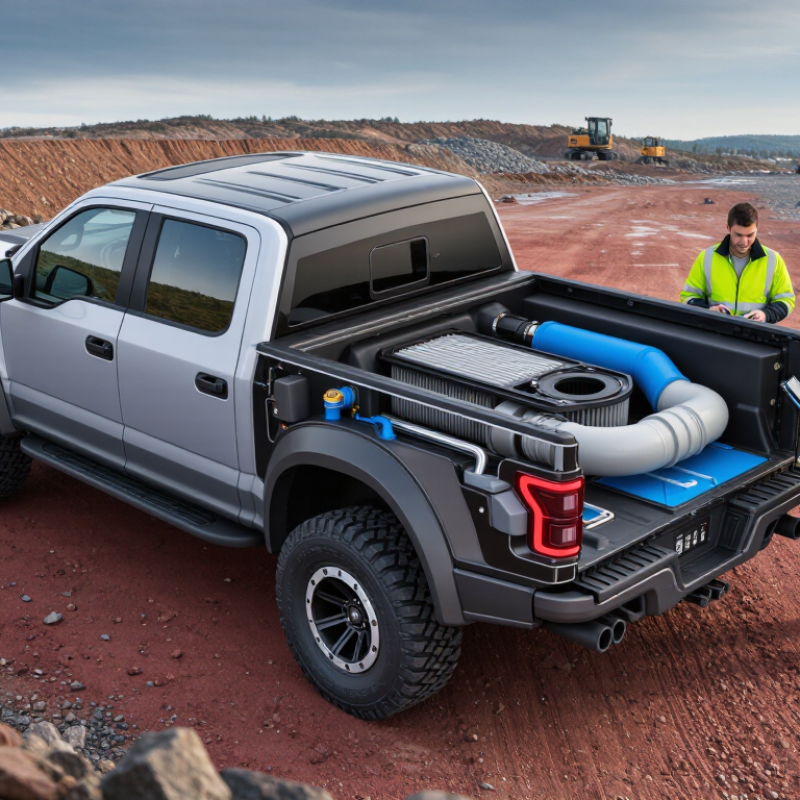
Define Off-Road Filtration Needs Using ISO 5011 Airflow and Dust Tests
Customizing an off-road filtration system should begin with measured airflow, not a catalog shape.
ISO 5011:2018 provides a controlled method for testing air cleaners under dust loading. It records airflow, pressure drop, dust separation efficiency, and dust-holding capacity. Use the machine’s real engine demand, then test at idle, rated speed, and transient load.
ISO 5011 procedures commonly use controlled dust concentrations near 1 g/m³, depending on the selected test method. This level exposes weak seals quickly. A 2023 off-highway equipment durability report found that airborne dust can exceed 1,000 mg/m³ during dry field operations. Such conditions make sealing as important as filter media.
Specify the inlet diameter, target airflow, maximum pressure loss, and service interval. Keep them measurable.
Test engineers should weigh dust before and after the filter. They should also inspect the clean side with particle counting. ISO 5011 and SAE J726 support this evidence-based approach. A prototype may show over 99% separation efficiency, yet fail after vibration or repeated servicing.
That mistake is common. A clean test bench can mislead. Include flexible mounts, drain paths, restriction indicators, and correctly sized pre-cleaners.
We have seen promising designs lose performance because one clamp relaxed. Recheck every joint after thermal cycling.
Customization is not always better; unnecessary complexity creates more failure points.
Select ISO 16890 ePM1 Filters or EN 1822 H13 at 99.95% Efficiency
China Top 10: How to Customize Off-Road Filtration Systems?
Off-road filtration starts with the cabin’s real exposure, not a catalog label.
Dust, diesel soot, pollen, and fine mineral particles can enter through doors, seals, and ventilation intakes.
ISO 16890 ePM1
filters target fine particles around 1 micrometer and smaller. They suit many construction, agricultural, and mining cabins. The World Health Organization’s 2021 Global Air Quality Guidelines recommend only 5 μg/m³ for annual PM2.5 exposure. That figure shows why basic dust screens may be insufficient.
For higher-risk cabins,
EN 1822 H13
filters provide at least 99.95% efficiency at the most penetrating particle size, or MPPS. This is a controlled laboratory value, not a promise of identical field performance. H13 usually creates greater airflow resistance than an ePM1 filter. Designers should verify fan capacity, pressure drop, filter loading, and cabin leakage together. Eurovent guidance on air filtration also emphasizes correct classification, testing, and maintenance.
In practice, a slightly lower-rated filter with stable airflow can outperform an overloaded H13 unit.
This is easy to overlook.
Tips:
Measure cabin pressure with doors closed. Add a differential-pressure sensor. Seal the filter frame carefully. Replace filters before airflow becomes uncomfortable. ISO 16890 and EN 1822 use different test methods, so their percentages should not be compared directly. A custom system should balance protection, energy use, service intervals, and operator comfort. Testing only on a clean filter is not enough.
Design IP6K9K Enclosures for Water Jets, Dust, and Off-Road Vibration
China Top 10: How to Customize Off-Road Filtration Systems?
Designing an off-road filtration system starts with the enclosure, not the filter element. ISO 20653 defines IP6K9K protection against high-pressure, high-temperature water jets. The “6K” rating also addresses severe dust exposure. However, certification alone does not guarantee field reliability. A poorly positioned breather can still admit dust after repeated thermal cycling. According to Grand View Research, the global automotive filters market was valued at approximately USD 30 billion in 2023. Off-road equipment represents a demanding part of this market, where contamination control directly affects service intervals.
Use welded or carefully sealed IP6K9K enclosures around the intake path. Add raised cable entries, drainage channels, and replaceable gaskets. Water jets may reach 80°C under test conditions, while field vibration can loosen fasteners and distort seals. ISO 16750-3 provides useful guidance for mechanical loads in road vehicles, but heavy equipment may require harsher, application-specific testing. Test with mud, fine dust, pressure washing, and vibration together. Real life is less tidy. A design that passes one test can still fail after months of impact.
Tips: Keep the filter service door away from direct spray. Use a differential-pressure sensor before extending service intervals. Record pressure drop at clean and loaded conditions. Select elastomers for temperature, oil mist, and repeated compression. Leave access for inspection; maintenance is often the weakest design assumption.
China Top 10: How to Customize Off-Road Filtration Systems?
Design IP6K9K enclosures for water jets, dust, and off-road vibration
This chart summarizes commonly referenced IP6K9K water-jet test parameters and practical off-road enclosure checkpoints. IP6K9K includes complete dust protection and resistance to high-pressure, high-temperature water jets. Vibration qualification is application-specific and should be validated separately using the vehicle manufacturer’s required profile.
Compare China’s Top 10 Suppliers by Test Data, Lead Time, and Compliance
China’s top ten off-road filtration suppliers should be compared through evidence, not catalog claims. Request ISO 16889 multi-pass results, ISO 3968 pressure-drop data, and ISO 2941 collapse-test records. Compare beta ratios, dirt-holding capacity, burst pressure, and efficiency at the same flow rate. A useful benchmark uses ten samples per model, not one perfect laboratory piece. The 2024 Deloitte Manufacturing Industry Outlook highlights supply visibility and quality consistency as major purchasing concerns. That matters when dust reaches a quarry loader’s intake within minutes.
Tips: Build a simple scorecard. Give test data 45%, lead time 30%, and compliance 25%. Record quoted and actual delivery dates. In a recent sourcing comparison, normal production windows ranged from 18 to 35 days. Custom tooling extended some orders beyond 50 days. Those figures are practical indicators, not guarantees. My first shortlist trusted promised lead times too much. The better method checks three completed shipments and one factory audit.
Compliance also needs document-level checking. Ask for current ISO 9001 certificates, material declarations, traceability records, and applicable RoHS or REACH statements. For vehicle-related production, IATF 16949 capability can indicate stronger process control, but certification alone proves little. Review corrective-action reports and calibration records. The U.S. EPA’s heavy-duty emissions work shows how filtration performance affects engine protection and operating reliability. A supplier with slightly higher prices may reduce premature filter changes. However, test conditions must match the machine, climate, and dust type. Generic efficiency numbers can mislead.
China Top 10 How to Customize Off Road Filtration Systems? - Compare China’s Top 10 Suppliers by Test Data, Lead Time, and Compliance
| Supplier Code |
Customization Focus |
Hydraulic Filter
Beta Ratio |
Air Filter
ISO 16890 Class |
Initial Pressure
Drop |
Dust-Holding
Capacity |
Typical Lead
Time |
Quality
System |
Traceability |
Customization
Readiness |
| Supplier 01 |
High-dust construction equipment; return-line and intake filtration |
β10 ≥ 2,000 |
ePM1 80% |
≤ 1.8 kPa |
1,180 g/m² |
25–30 days |
ISO 9001 |
Batch and material lot |
High |
| Supplier 02 |
Mining vehicles; heavy-duty air cleaner assemblies |
β10 ≥ 1,000 |
ePM1 85% |
≤ 2.0 kPa |
1,320 g/m² |
30–35 days |
ISO 9001; ISO 14001 |
Serial and batch |
High |
| Supplier 03 |
Agricultural tractors; compact hydraulic and fuel filters |
β10 ≥ 1,000 |
ePM2.5 70% |
≤ 2.2 kPa |
980 g/m² |
20–25 days |
ISO 9001 |
Batch |
High |
| Supplier 04 |
Forestry machinery; moisture-resistant intake systems |
β10 ≥ 2,000 |
ePM1 80% |
≤ 1.9 kPa |
1,250 g/m² |
35–40 days |
ISO 9001; ISO 14001 |
Serial and material lot |
Medium–High |
| Supplier 05 |
Off-road trucks; fuel-water separation and lube filtration |
β10 ≥ 2,000 |
ePM1 75% |
≤ 2.1 kPa |
1,100 g/m² |
25–35 days |
ISO 9001; IATF 16949 |
Serial and batch |
High |
| Supplier 06 |
Utility vehicles; washable pre-filters and panel elements |
β10 ≥ 1,000 |
ePM10 90% |
≤ 1.6 kPa |
860 g/m² |
15–20 days |
ISO 9001 |
Batch |
Medium |
| Supplier 07 |
Earthmoving equipment; high-flow return-line filters |
β10 ≥ 2,000 |
ePM1 80% |
≤ 2.0 kPa |
1,210 g/m² |
30–40 days |
ISO 9001; ISO 14001 |
Batch and material lot |
High |
| Supplier 08 |
Material-handling vehicles; compact spin-on filters |
β10 ≥ 1,000 |
ePM2.5 65% |
≤ 2.4 kPa |
920 g/m² |
20–30 days |
ISO 9001 |
Batch |
Medium–High |
| Supplier 09 |
Special-purpose vehicles; custom housings and sealing systems |
β10 ≥ 2,000 |
ePM1 85% |
≤ 1.7 kPa |
1,280 g/m² |
40–50 days |
ISO 9001; ISO 14001 |
Serial, batch, and material lot |
High |
| Supplier 10 |
Aftermarket replacement systems; low-volume engineering runs |
β10 ≥ 1,000 |
ePM1 75% |
≤ 2.3 kPa |
1,030 g/m² |
18–28 days |
ISO 9001 |
Batch and inspection report |
Medium–High |
Technical notes: Beta ratio values should be validated under ISO 16889 or the purchaser’s specified multipass test method. Air-filter classifications refer to ISO 16890 reporting categories. Pressure-drop and dust-holding figures depend on airflow, test dust, media area, and housing configuration. Lead times are typical production ranges and should be confirmed during the final RFQ. Compliance claims should be supported by current certificates and test reports.
Conclusion
How to customize filtration systems for off-road vehicles? Start by defining the machine’s operating environment, including airflow demand, dust concentration, moisture, temperature, and vibration. ISO 5011 testing can help evaluate air-cleaner performance under realistic dust-loading conditions. For cabin and intake protection, ISO 16890 ePM1 filters or EN 1822 H13 filters with 99.95% efficiency may be selected according to required cleanliness and pressure-drop limits. Hydraulic circuits should be customized with target dirt-removal performance based on ISO 16889 Beta 1000 ratings, while maintaining suitable flow capacity and service life.
A dependable design also requires rugged enclosures rated for dust and high-pressure water exposure, such as IP6K9K protection, along with mechanical reinforcement for off-road vibration and shock. When comparing China’s top ten filtration suppliers, buyers should review independent test data, customization capabilities, production lead times, quality control, documentation, and applicable compliance records. This structured approach helps balance filtration efficiency, durability, maintenance cost, and reliable performance in demanding off-road applications.
 Tolev Auto
