A custom oil filter’s micron rating can look precise on a product sheet, yet the number alone tells only part of the story. It may describe nominal efficiency, absolute filtration, or performance under a specific test method. Those terms are not interchangeable. A filter labeled “10 micron” does not automatically capture every particle measuring 10 microns or larger.
How to verify the micron rating of a custom oil filter? Start by asking the manufacturer for a written test report tied to the exact filter model and media. Check the test method, test fluid, particle type, flow rate, and reported efficiency. A beta ratio or particle-count result is more useful than an unsupported number. For example, a beta ratio of 200 at a stated particle size indicates measured performance under defined conditions; it is not a universal promise for every engine or oil.
Inspect the filter’s construction, too. Media area, pleat spacing, seals, and bypass-valve settings can affect real-world filtration. Ask whether the sample tested matches the production unit, then compare its specifications with your engine’s flow and pressure requirements. Paperwork matters. So does a physical sample.
Be cautious with vague claims. If a supplier cannot explain how a rating was measured, the claim needs more scrutiny. Even a credible report has limits: laboratory results may not reproduce heat, vibration, or long service intervals exactly. Verification is a process, not a single label. The goal is to confirm what the filter captures, under which conditions, and whether that performance suits your application. Sometimes the answer is less tidy than the catalog suggests.
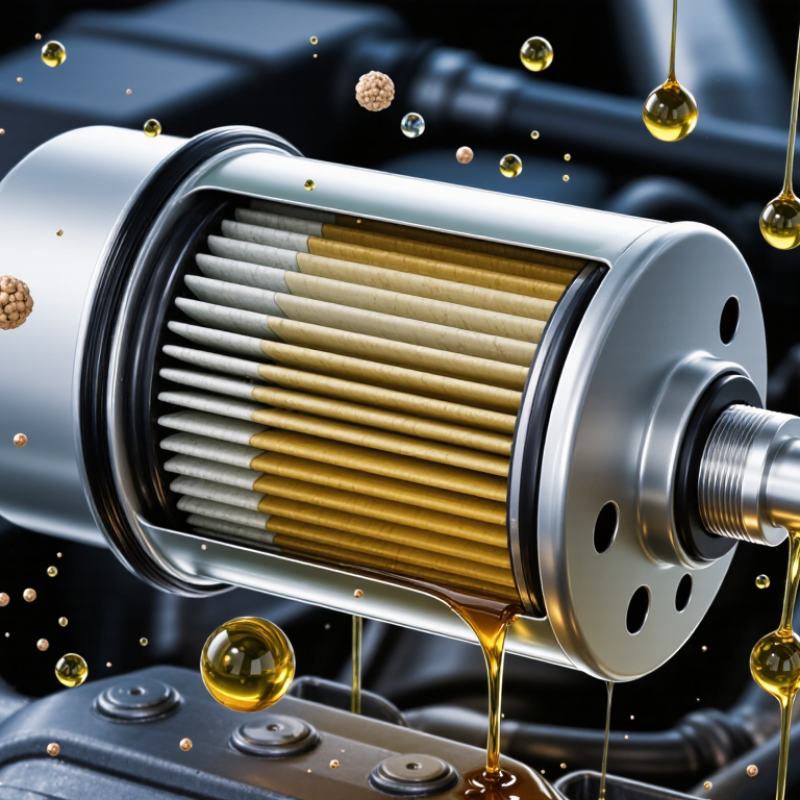
A micron is one-millionth of a meter. In an oil filter, the micron rating describes the size of particles the filter media can capture under stated test conditions. It does not mean every particle above that size is stopped, or every smaller particle passes through. Capture depends on the media, oil flow, and how the rating is defined.
A 10-micron nominal rating may indicate that the filter captures a stated share of particles around that size. An absolute rating is often used for a tighter capture claim, but definitions can vary. Check the test method and efficiency figure rather than relying on the number alone. That matters. A filter’s performance can change with oil viscosity, flow rate, and pressure. Ask for a test report showing particle-size efficiency, test conditions, and the method used. When comparing custom filters, use results from the same test method; otherwise, the figures may not be directly comparable. A rating is useful, but it is not the whole picture. I would also check that the filter maintains suitable flow for the application.
A micron rating is not meaningful until you know what kind of rating it describes. “Nominal” usually indicates a stated capture level under particular test conditions, while “absolute” suggests a more restrictive particle-retention claim. These terms are not used consistently by every supplier. Ask for the test method and efficiency data behind the number, not just a value printed on a drawing. A 10-micron claim without a stated efficiency can leave important questions unanswered.
For full-flow engine-lubricating-oil filters, ISO 4548-12 describes a multipass test method. Other oil-filter applications may require a different standard or a documented, application-specific procedure. Do not assume that a hydraulic filter test applies to an engine oil filter. Check the report for the test fluid, flow rate, contaminant, pressure drop, and particle-size measurement method. These details help show whether results reflect the conditions your custom filter will actually face. A clean laboratory result is useful, but it may not predict every operating condition.
Tips: Request the complete test report, including the filter’s beta ratio or efficiency by particle size. Confirm the standard’s edition and ask whether the tested element matches your production design. Small construction changes can matter. I would be cautious about comparing two micron figures when their test conditions differ; the comparison may look clear, but it is not.
Review the custom oil filter’s current technical data sheet, not just a sales description. Confirm that its part number matches the filter being evaluated. Check whether the micron rating is nominal or absolute. These terms are not interchangeable. An absolute rating should state the test method and particle-capture efficiency, often expressed as a beta ratio. A bare “10 micron” line proves little. Look for the test fluid, particle type, flow rate, and operating conditions used to establish the figure. Details matter.
Then compare those conditions with the equipment’s actual oil, temperature, and flow. A rating measured with a thin test fluid may not predict performance with cold, viscous oil. Check the stated differential-pressure limit, too; a filter can capture fine particles yet restrict flow sooner than expected. Confirm the document’s revision date and whether it describes the media and construction of the exact custom configuration. I admit, a tidy table can still leave important questions unanswered. If the test standard or efficiency threshold is missing, ask the supplier for the underlying test report or written clarification before treating the rating as verified.
A micron rating should be verified on the filter, not inferred from its media label. A controlled multipass test sends contaminated oil through the element while sensors count particles upstream and downstream. Keep the oil temperature, flow rate, viscosity, and contaminant feed steady. Small changes matter.
ISO 4548-12 describes multipass testing for full-flow lubricating-oil filters, while ISO 16889 sets out a multipass method for hydraulic filter elements. Both use particle counts to assess filtration performance under defined conditions. The beta ratio is the upstream particle count divided by the downstream count at a stated particle size. For example, a beta ratio of 200 at 10 microns corresponds to 99.5% efficiency at that size, using the standard calculation: 1 − 1/200. It does not mean every 10-micron particle is captured. Read the test report for the particle-size calibration, sampling method, and whether the result is an initial or stabilized value.
Ask the test lab to record differential pressure and contaminant capacity alongside efficiency. A filter can meet a target early, then perform differently as it loads. Real oil behaves differently. Field conditions vary, and a clean laboratory result cannot represent every engine or operating cycle. That limitation deserves attention, even when the test procedure is sound. Compare filters only when the test conditions and reported rating basis match.
How to read this chart: Capture efficiency is calculated as (1 − 1/β) × 100%, where β is the ratio of upstream to downstream particle counts. These are calculated reference values, not filter test results. To verify a micron rating, run a controlled multipass test, measure particle counts at the specified particle size, and compare the resulting beta ratio with the filter’s stated acceptance criterion. ISO 4548-12 describes a multipass test method for full-flow lubricating oil filters.
A micron rating is useful only when its test conditions resemble the filter’s actual job. Compare the supplier’s test report with your system’s required flow, operating temperature, oil viscosity, and allowable pressure drop. A filter tested with warm, low-viscosity oil may behave differently in a cold start. Numbers need context.
Check whether the rating is nominal or absolute, and review the test method and particle-size data. If the system specification requires a particular beta ratio, confirm the report states that ratio at the relevant particle size. Also compare the reported flow rate and differential pressure with your equipment limits. A matching micron figure alone does not prove the filter will meet performance needs. That matters. If possible, request results from a test using conditions close to your application, then record any gaps or assumptions. Reports can look precise while leaving practical questions unanswered.
Tips: Keep the raw test report, not just a product summary. Verify units and test conditions. If results are borderline, test the filter in a controlled loop before approving it for service. I would not treat one clean result as the whole story.
Match the part number and configuration to the filter being evaluated. Check the revision date, media details, and test conditions. A sales summary is not enough.
They describe different levels of particle capture and should not be treated as interchangeable. An absolute rating should include a test method and capture efficiency. A bare “10 micron” claim proves little.
Particle type, test fluid, flow rate, and operating conditions affect the result. If the method or efficiency threshold is missing, request the full test report.
Compare the test conditions with your system’s oil, temperature, and required flow. A rating measured with thin fluid may not predict performance with cold, thick oil.
It reports particle-capture performance at a stated particle size. Confirm the test report gives the beta ratio your system requires. The number needs context.
Yes. A filter may capture fine particles but restrict flow sooner than expected. Compare its stated differential-pressure limit with your equipment’s limits.
Keep the raw report, verify its units, and note any assumptions. A controlled loop test may help before approving the filter. One clean result is not the whole story.
No. Check the test fluid, flow rate, temperature, oil viscosity, and pressure drop. I admit, even a tidy report can leave practical questions unanswered.
How to verify the micron rating of a custom oil filter? Start by understanding what the rating describes: the size of particles a filter can capture and the efficiency at which it captures them. A micron value alone may not tell the whole story, because nominal and absolute ratings can represent different levels of particle removal. Identify which type is being claimed and the test standard used to determine it before assessing the filter.
Next, review the custom filter’s technical documentation for its stated rating, test conditions, and supporting data. When documentation is incomplete or the claim needs confirmation, use controlled testing with suitable equipment and consistent procedures. Compare the resulting particle-capture performance with the stated rating, then assess whether it meets the cleanliness and flow requirements of the intended oil system. This step-by-step approach helps distinguish a meaningful, test-supported rating from a value that lacks clear context.

Tolev Auto